
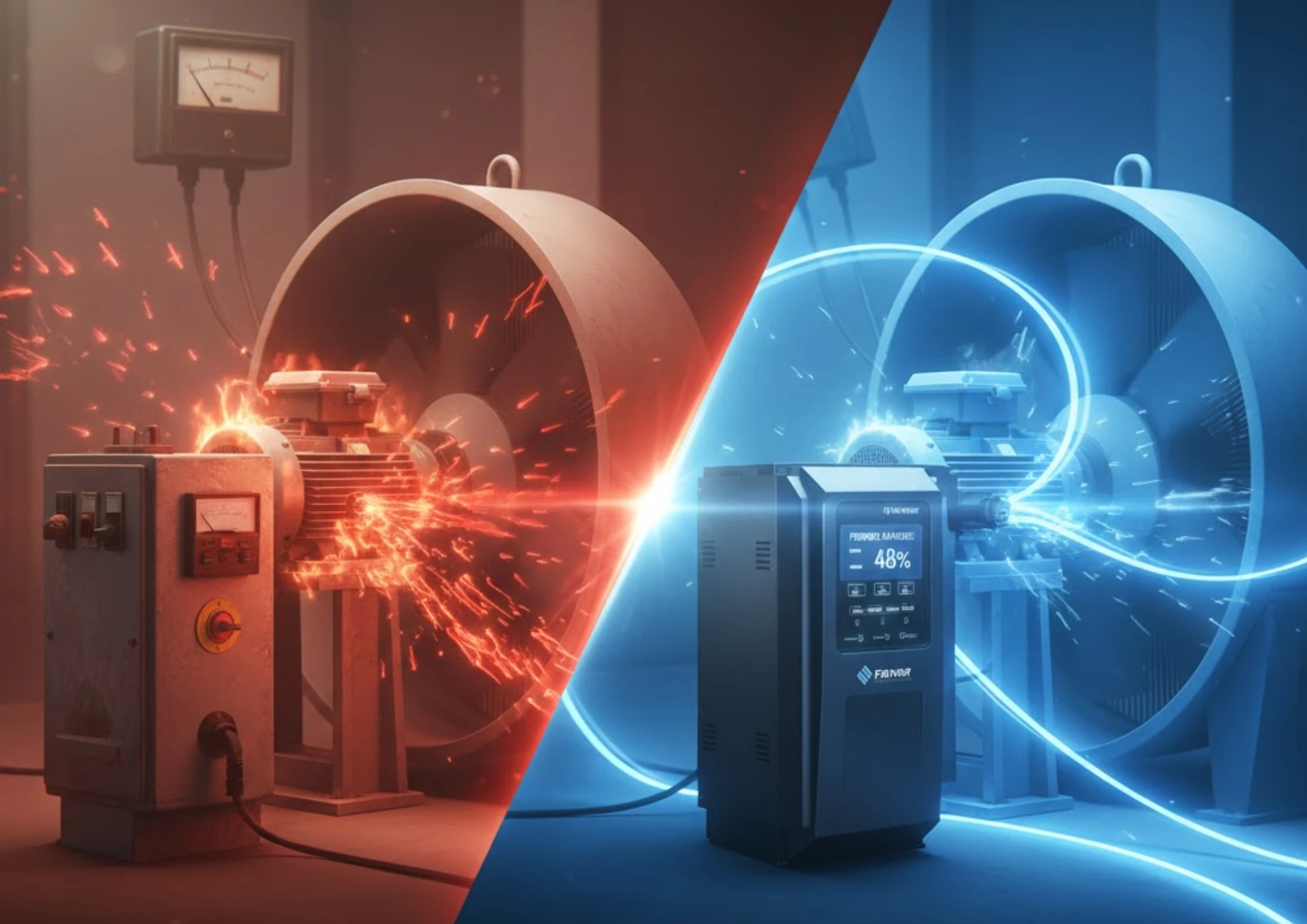
Energy Efficiency in the Industry: the Bottom-line is the way renewal of your VFDs will save you money of operation.
Energy is not only a utility in the contemporary industrial world, but it is among the largest overheads in the balance sheet. With the consideration of industrial facilities in Saudi Arabia, in which the Saudi Vision 2030 devotes a major priority to the sustainability of the power consumption and the efficiency of the industrial processes, determining the ways to optimize the power consumption becomes an obligation, but not a choice. Even though the motor control system in use by some of the plants is years old and drives in the older generation, the recent change of equipment using the new modern VFD technology has seen saving of up to 50 percent of the energy consumed in specific applications.
The Giant Cost of Industrial Wastiness of Energy.
Electric motors are the workhorse of the industry, and they operate anything it can such as massive cooling fans, water pumps, conveyor belts, compressors, etc. The systems powered by electric electric motors constitute nearly 70 percent of all of the electrical energy consumed in the industrial sector.
The problem? A large percentage of these motors are set at a constant speed regardless of what the actual demand of process is. It is the opposite of braking your car and putting your car on the gas pedal. This kind of energy saving method burns giant power sources of heat and friction.
Speed Control The art of VFDs to revolutionize efficiency.
The motor brain is known as Variable frequency drive (VFD). Variation of frequency and voltage to the electric motor varies its speed and torque at an astronomical precision by varying the frequency in minute steps.
The Affinity Laws: Little Scratchers in Big Dividends.
The Affinity Laws refer to the relationships between speed to power consumption in centrifugal processes in pumps and fans. These legislations stipulate that the power consumption is proportional to the cube of the speed of the motor.
To explain this, as you reduce the speed of a fan by a measly 20 percent of the power required is cut nearly by half. It is this kind of accelerated development of the relationship that will give upgrades of VFD a payback in a few months as opposed to many years.
4 Large Methods s minimise Operation costs.How modernized VFD
Eradication of Inrush Current (Soft Starting)
Once a motor has been started across the line (Direct-On-Line) it can draw 6 to 10 times the full-load current. This rush current causes massive spikes in power demand which leads to higher utility peak demand charges. Soft start is now used in the VFDs as a smooth way of putting the motor to speed and out of these costly spikes.
Optimized Power Factor
A motor of low power factor can be a fairly old one or it can be a poorly adjusted system; in other words, it may be drawing more current than it can put into service. Poor power factor in utilities is often subject to fines. It is preferable to change to current VFDs your distance to the simplest VFDs so that you give up these penalties and have an efficient electrical infrastructure.
Reduced Mechanical Wear and tear.
Not only energy is being cut down. VFDs also put less stress on belts, gears and bearings since it does not have the violent jerk of a full speed start. Maintenance costs are also reduced and high equipment lifespan is achieved.
Complex Process Robotization.
The IoT and sensor technologies are also implemented in the modern drives. They can automatically control speed based on real time pressure and flow or temperature feedbacks in such a way that the motor requires no more effort than is required at the point.
Why Now? Towards “Green Industry” in Saudi Arabia.
The government has introduced more difficult standards of energy audits and efficiency as the industrial sector in Saudi Arabia continues to expand at a very rapid pace. One of the straight forward ways to achieve both the local energy standards and international standards ISO 50001 energy management is to modernize your VFD fleet.
Fan v. Damper Control Case Study
Method Efficiency Energy Waste Mechanical Stress.
Damper Control(Old) Low High (Heat/Vibration) High. Personal VFD (Upgrade) Very High Negligible Low.
Preparation to Automate your Facility with Fanar. The issue of upgrading does not just lie in the procurement of a new box, but with the search of a solution in respect to your specific infrastructure. Our methodology that we apply at Fanar Automation is highly precise so that we can be able to guarantee the highest ROI:
- Energy Audit We will have an indication on how to invigorate consumption at your current motor and find low riding fruit to save.
- System Integration We ensure that the new VFDs would be fully compatible with your existing PLCs and SCADA systems.
- Saudi-Standard Compliance all are in compliance of SASO and local safety.
- Professional Commissioning Not just factory settings, but the most efficient settings, have been made possible by the drive parameters.