
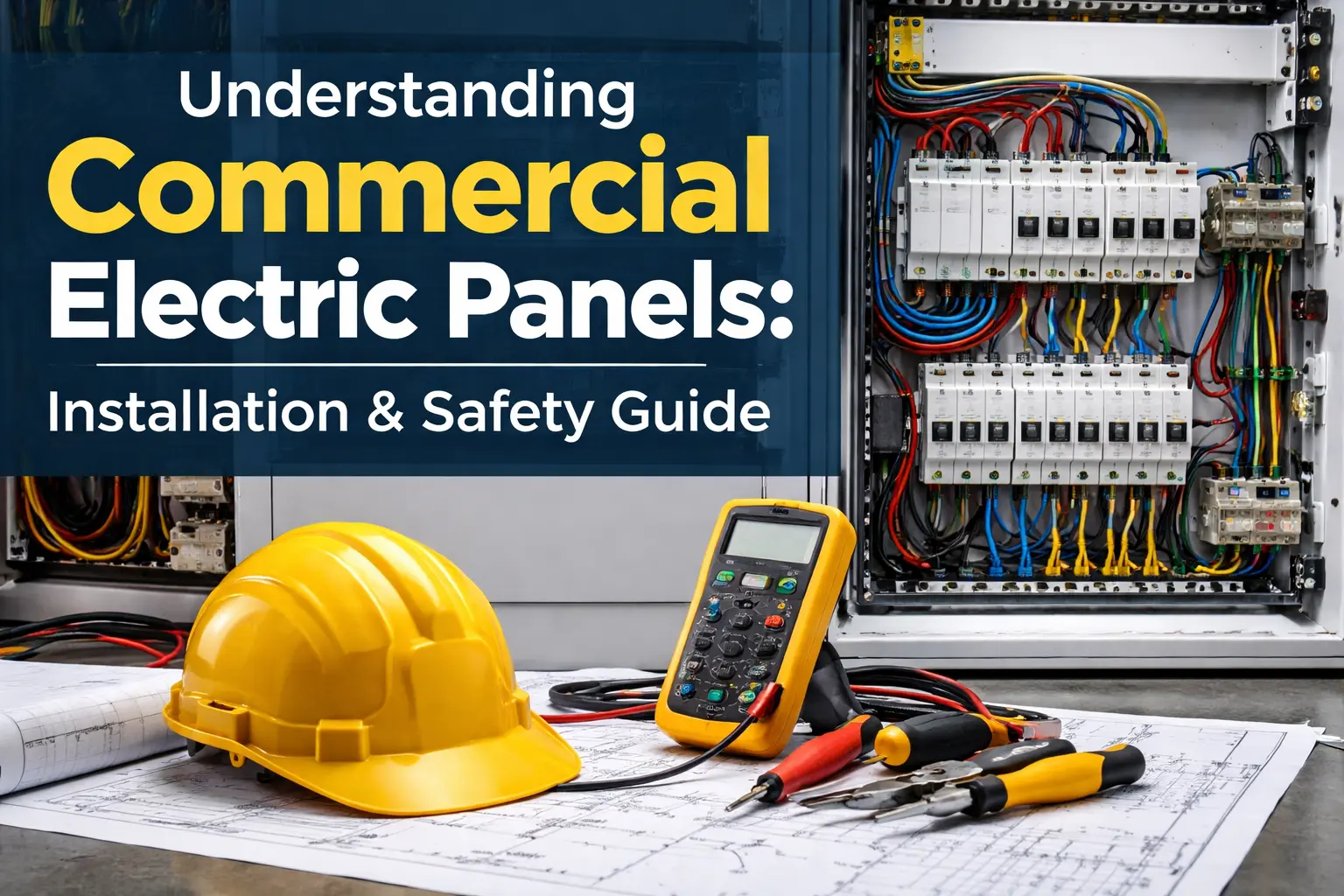
Understanding Commercial Electric Panels
Electrical distribution panels (also known as switchboards) are the heart of commercial buildings. They need to be installed safely, effectively, and in accordance with regulations.
Pre-Installation Planning
Site Assessment
Before installation begins, it is crucial to:
- Evaluate current electrical load requirements
- Assess future growth requirements
- Consider physical installation location
- Consider adequate ventilation
- Consider accessibility for maintenance
Design and Specification
The design phase includes:
- Load calculations and panel sizing
- Circuit design and breaker sizing
- Coordination with SASO requirements
- Integration with existing systems
- Backup power considerations
Installation Steps
Step 1: Safety Preparation
- Obtain necessary permits
- Schedule utility coordination
- Perform lockout/tagout procedures
- Clear work area
- Establish safety protocols
Step 2: Equipment Placement
- Choose suitable location
- Leave enough space (3 feet clearance)
- Verify structural support
- Plan cable routing
- Consider future accessibility
Step 3: Cable Installation
- Use safe and secure cables
- Install appropriate conduit protection
- Follow proper cable sizing
- Apply heat shrinking and labeling
- Maintain separation requirements
Step 4: Component Installation
- Install main breaker first
- Mount individual circuit breakers
- Connect ground and neutral buses
- Install all required components
- Check for correct spacing and alignment
Step 5: Connection and Testing
- Connect main supply cables
- Install protective devices
- Perform insulation testing
- Verify proper grounding
- Test all circuits
Step 6: Final Inspection
- Verify SASO compliance
- Confirm proper labeling
- Document all circuits
- Perform load testing
- Schedule utility inspection
Critical Safety Considerations
- Always de-energise before starting
- Lockout/tagout when necessary
- Wear appropriate PPE
- Adhere to electrical codes
- Always work with another person on high voltage
Common Installation Mistakes to Avoid
- Overloading circuits
- Improper cable sizing
- Missing or inadequate labeling
- Improper grounding
- Inadequate ventilation
- Non-compliant installation
Post-Installation Maintenance
- Regular inspection schedule
- Thermal imaging inspections
- Load monitoring
- Cleaning and maintenance
- Documentation updates
Why Choose Professional Installation?
Professional installation ensures:
- Code compliance
- Correct sizing and design
- Correct installation practices
- Safety verification
- Warranty coverage
- Compliance documentation